
A Very Special Treat
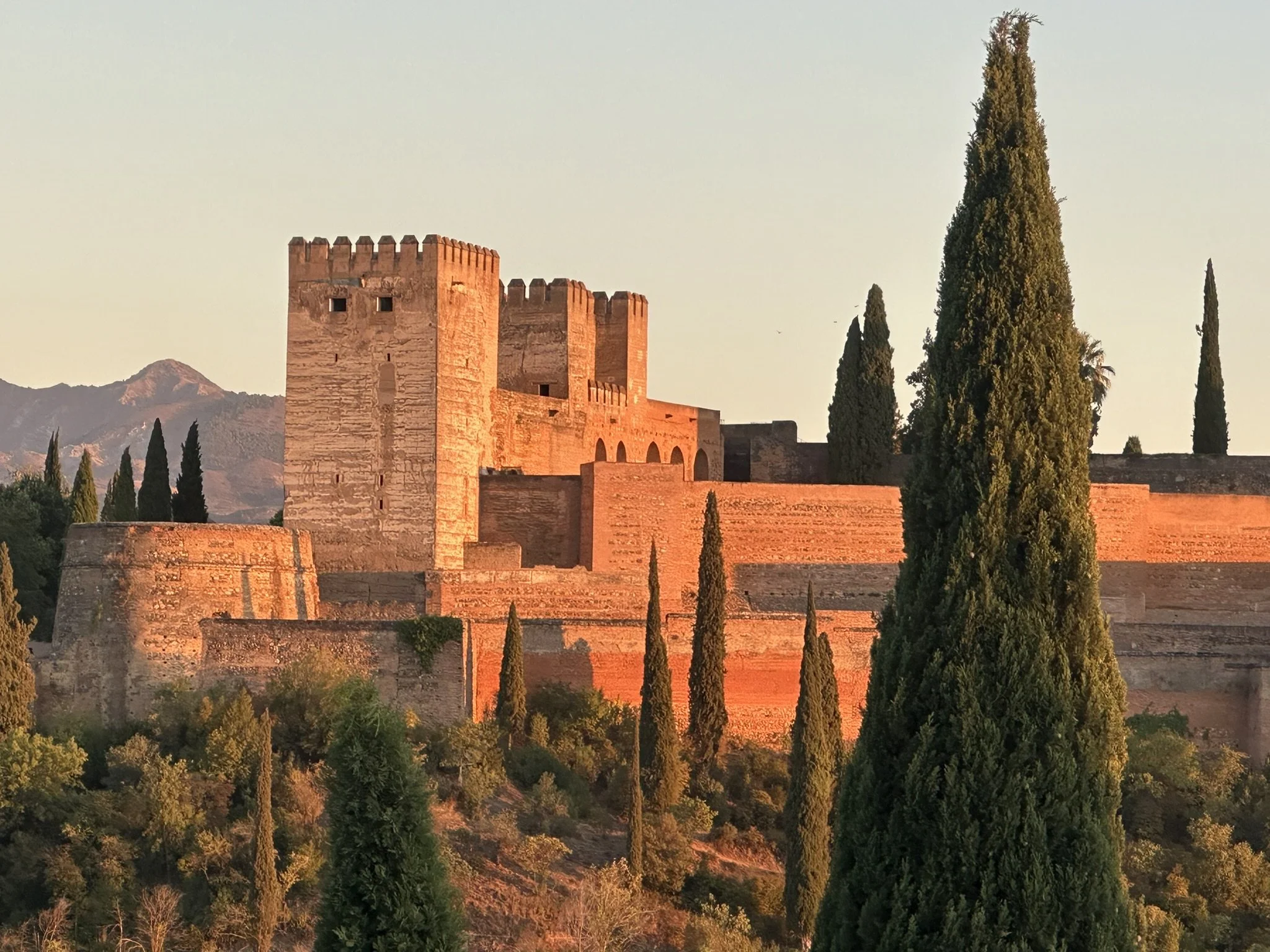
A very special treat this year has been to visit Granada and stay in a hotel on the foothills facing its most famous landmark — the Alhambra Palace. And what a landmark it is.
Built in 1238 by the Nasrid Dynasty, a visit to the Alhambra and the Generalife Gardens has to be on everybody’s bucket list. It is probably one of the most beautifully preserved examples of Moorish architecture in the world. Its scale is immense, its general condition incredible — no wonder the authorities have very strict control over who is allowed into its walls. Remember to take your passport!

An Engineering Marvel — Water in the Heart of the Palace
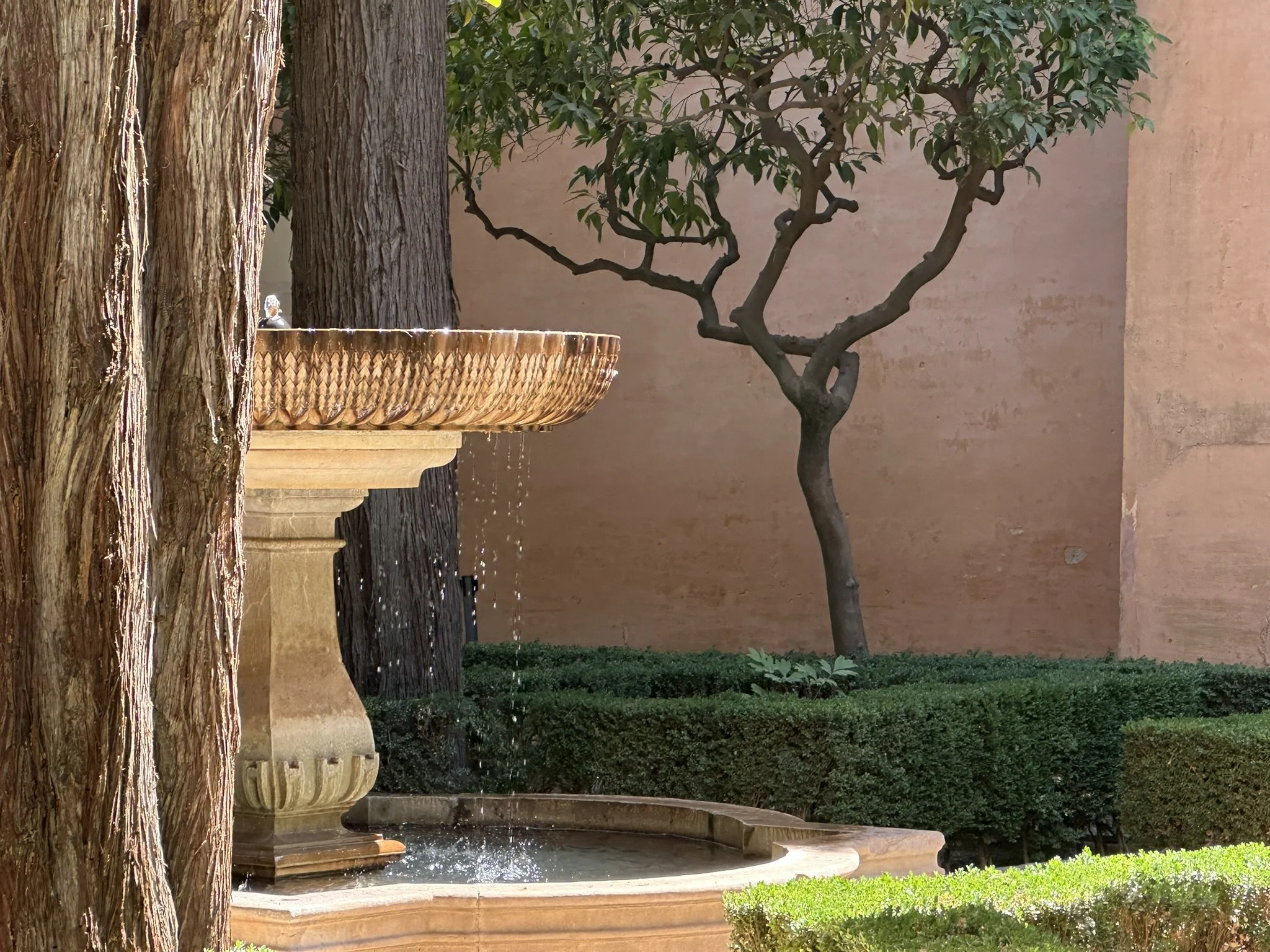
The wonderful gardens of the Alhambra and its surrounds have everything to thank the Moors for — their creation, their ingenuity, and their remarkable vision in designing them with access to water 24 hours a day.
Despite the palace’s elevated position, their engineers managed to trace the source of the River Darro and built the Royal Waterway — a channel that drew water from the river some six kilometres upstream and fed it directly into the Alhambra via the Generalife Gardens. This is still the main source of water today. A perfect example of modern-day garden irrigation at work hundreds of years before the concept existed.
For a garden designer, this is fascinating. The principle of using water as both a practical and sensory element — to cool the air, to create a sense of calm, through movement and sound — is as relevant to a garden in Tunbridge Wells, as it was to a palace in Andalusia. It’s a lesson in how great design stands the test of time.
The Generalife Gardens — A Royal Retreat
Our visit to the Alhambra started with a tour of the Generalife Gardens and the North Pavilion with its beautiful water garden courtyard. The Generalife was a retreat — pleasure gardens where the Granadan monarchs could relax, away from the daily toil and hustle and bustle of court. There is understandably a degree of formality in the way the gardens are laid out, both to account for the necessary terracing and the predominance of water features, and also for the popularity of the Cypress tree — which Muslim architects particularly favoured for their straight, deep-rooted form that allowed close planting in safe proximity to their structures. The effective use of Cypress trees helps create natural verticals among the buildings and walls and softens the whole vista beautifully.
Above the Generalife, the Royal Waterway channels fresh water into expansive cisterns that store it temporarily before carefully distributing the flow to the beautifully planted terraces, intricate decorative water features, and the tranquil water garden courtyard of the North Pavilion. From there, an aqueduct gracefully carries the water onward to the Alhambra, where it is overseen by the imposing fortified Water Tower — a structure that historically played a crucial role in protecting the estate.
Planting — Abundance, Colour and Sensory Delight
The planting throughout the gardens of the Generalife and Alhambra is generous, considered and spectacular. During our visit we were treated to Acanthus, Agapanthus, Anemones, Bougainvillea, Day Lilies, Delphiniums, Honeysuckle, Magnolia, Roses, Salvia and Wisteria in abundance. The gardeners were also tending some wonderful new beds that had been turned over to perennial meadows — which looked splendid in the hot Granada sunshine.
What strikes you most is how the planting always serves the architecture, rather than competing with it. Soft, fragrant and colourful planting is used to contrast the hard geometric lines of the stonework — creating a balance between structure and nature that feels effortless. It’s an approach we draw on regularly in our own work, whether designing a Mediterranean-inspired courtyard in Kent, or a formal town garden in Tunbridge Wells.
What the Alhambra Teaches Us About Garden Design
The Alhambra is more than a beautiful place to visit — it’s a lesson in timeless design principles that remain as relevant today as they were in the 13th century. The use of water as a central feature. The balance of shade and light. The way enclosed courtyards create intimacy and seclusion. The repetition of planting patterns to create rhythm. The way a single strong idea — here, Moorish architecture — can be carried through every element of a space, from the grandest archway to the smallest planting bed.
These are principles we think about with every garden we design. And spending time in a space where they have been applied at such an extraordinary scale is genuinely inspiring — a reminder of why we love what we do.
Planning Your Visit
The best time to visit Granada and the Alhambra is in the spring (April to June) or autumn (September to October), when temperatures are warm and pleasant without being overwhelming. We flew to Malaga and took the train to Granada — straightforward, affordable and highly recommended. You don’t need a car in the City; you can walk and take taxis easily, but do try to stay central.
One final and very important piece of advice: do not go to Granada without booking your train tickets and Alhambra entrance tickets before you leave home. Once there, it is virtually impossible to get tickets on the day. For more information about the Alhambra Palace, visit www.alhambradegranada.org, and for tickets, www.alhambra-entradas.org.
Inspired to Bring Something Special Into Your Own Garden?
At Gardenproud, we love drawing on great gardens from around the world — including the Alhambra — to create bespoke designs for homeowners in Tunbridge Wells, Tonbridge, Crowborough and across Kent. Whether you’re dreaming of a Moorish-inspired courtyard, a water feature, or simply a garden that transports you somewhere special — we’d love to help make it a reality.
Get in touch today for an initial consultation.